
2026-11-28 ·
Tree-Related Roof Issues in Newark Neighborhoods
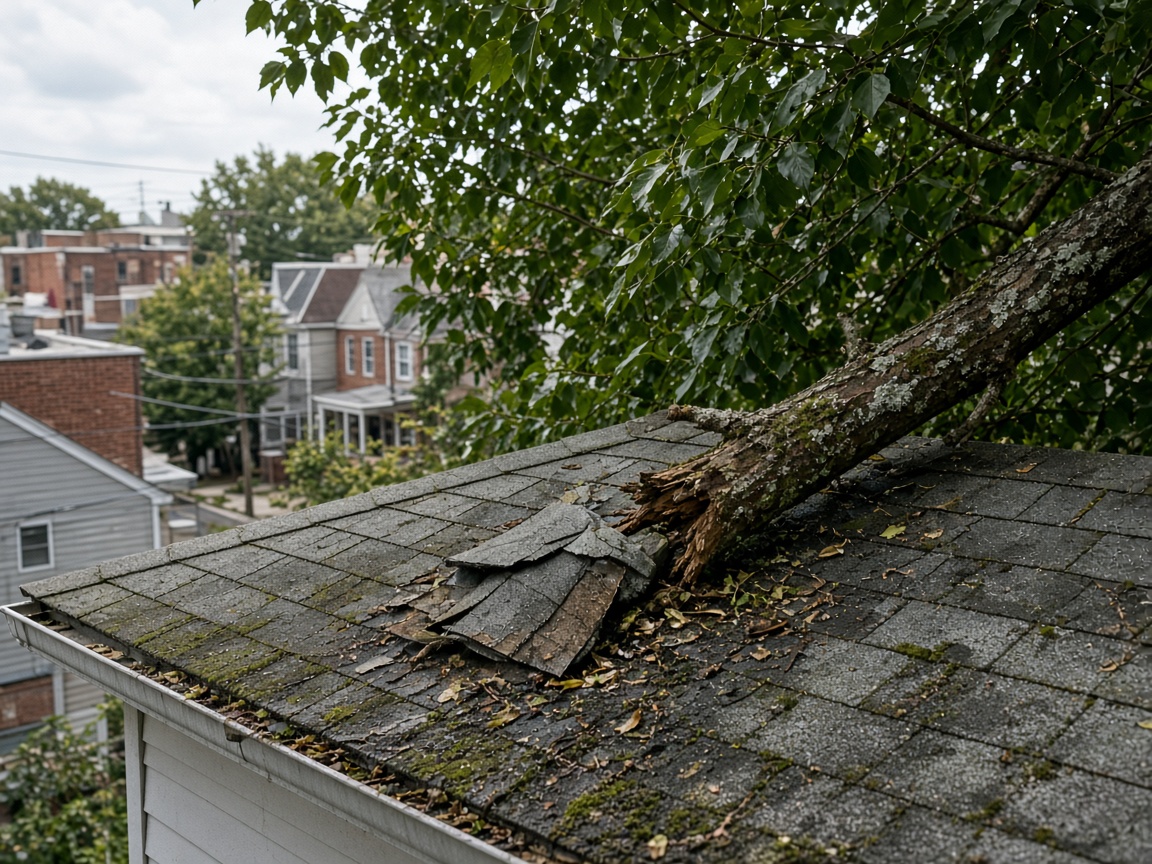
Mature trees in Newark frequently cause punctures, abrasions, and debris buildup on asphalt shingle roofs, especially on homes built before 1950 in neighborhoods such as the North Ward, Vailsburg, and Weequahic. These issues appear most often after wind events or heavy leaf drop, leading to leaks that homeowners address through targeted roof repair newark nj.
Branch and Limb Damage Patterns
Newark's humid subtropical climate supports large oak and maple trees that drop limbs during summer thunderstorms and winter ice loads. In the Ironbound district near Newark Penn Station, older two-story homes sit close to street trees whose branches overhang roofs at 15–25 feet. When a limb falls, it often tears shingles and underlayment rather than just scattering debris. Similar patterns occur near Branch Brook Park where park-adjacent properties in the Central Ward see repeated limb strikes on south-facing slopes. These impacts create entry points for water that travels under shingles and reaches sheathing within one or two rain events. Inspectors routinely find 1–3 inch punctures that require immediate patching before the next freeze-thaw cycle expands the damage.
Leaf and Debris Accumulation Effects
Fallen leaves collect in valleys, around chimneys, and inside gutters on homes in University Heights and South Ward. The resulting dams force water under flashing and into attic spaces during the heavy rains that follow Newark's hot summers. In Weequahic, properties near the golf course experience thicker leaf layers from maples that hold foliage longer into November. This debris also traps moisture against the roof deck, shortening shingle life by several years compared to cleared roofs. Gutter overflows from leaf blockages send water cascading over eaves, soaking fascia boards and promoting rot that later shows as sagging sections visible from the street.
Neighborhood-Specific Tree Pressures
Downtown Newark and North Ward streets lined with older maples create constant needle-like debris on flat and low-slope sections common to row homes. East Orange borders bring additional silver maple issues that drop wet, heavy leaves after summer storms. Homes in Vailsburg and Central Ward often back up to larger lots with 60–80 foot trees whose root systems heave sidewalks but also drop larger branches during the cold winters typical of Essex County. These local conditions mean roof inspections must account for both overhead canopy density and prevailing wind directions that push debris toward specific roof planes.
Seasonal Timing and Inspection Points
Spring and fall remain the highest-risk periods for tree-related roof problems in Newark. After winter, ice-loaded branches break and land on roofs before homeowners schedule spring checks. Late October leaf drop coincides with the first cold rains, so clearing gutters before temperatures drop prevents ice dams. Walk the perimeter after any wind event above 35 mph and look for fresh shingle tears or displaced granules. Check valleys and the uphill side of chimneys where limbs tend to lodge. These steps identify issues early enough to schedule roof repair newark nj before water reaches interior ceilings.
Homeowners who notice repeated debris or small leaks benefit from reviewing average cost of roof repair in newark nj to understand typical project scopes. Those facing sudden limb damage after storms should consider emergency roof repair newark nj to prevent further water intrusion. Planning ahead with preparing your newark roof for winter reduces the chance of ice-related complications from nearby trees.