
2026-11-28 ·
Signs of Ice Dam Damage on Newark Roofs
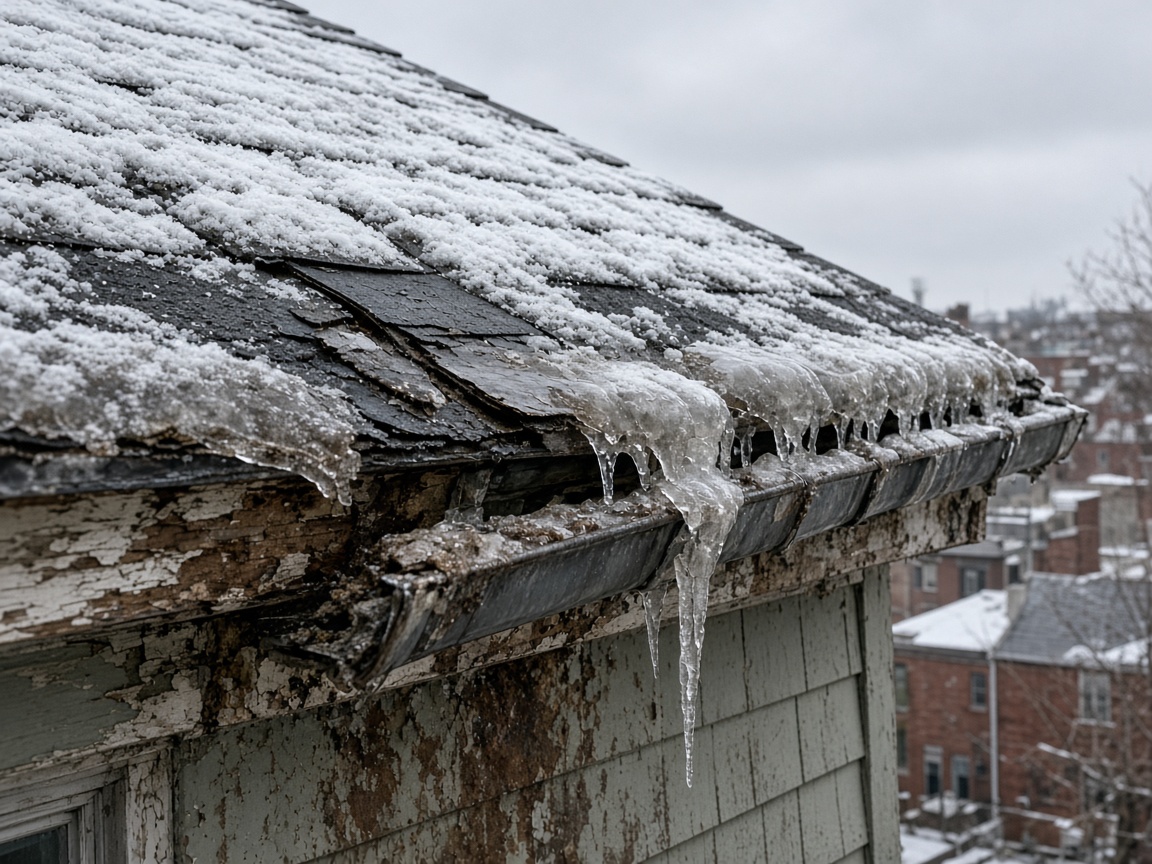
Ice dam damage on Newark roofs typically appears first as dark water stains along ceiling edges and attic insulation in homes built before 1950, especially after several freeze-thaw cycles in Essex County winters. These stains often trace back to melted snow that pooled behind ice ridges and seeped under shingles on houses in Ironbound and Downtown Newark.
Exterior Clues Around Newark Roofs
Homeowners in the South Ward and Central Ward frequently notice heavy icicle buildup along eaves and gutters after January cold snaps, a direct result of heat escaping from poorly ventilated attics in older two-story frame houses common throughout Essex County. Look for warped or lifted shingles near the roof edge and dark streaks running down siding, which indicate repeated water flow from ice dams. In Vailsburg and Weequahic, where mature trees drop leaves into gutters, blocked drainage worsens the problem by allowing water to back up under the roof deck. Checking these areas after each winter storm reveals whether ice dams have already compromised flashing around chimneys or skylights. Professional roof inspection services help confirm the extent without climbing in winter conditions.
Interior Signs in Older Newark Homes
Water marks on attic sheathing and wet insulation appear within days of an ice dam event in University Heights and North Ward properties, where many homes retain original plaster ceilings that hide leaks until they reach living spaces. Peeling paint or bubbling drywall along second-floor walls signals moisture traveling down from the roof edge, a pattern seen repeatedly in Central Ward row houses exposed to Newark's humid subtropical winters. Musty odors rising from ceiling vents often accompany these signs because trapped water promotes mold growth in the confined spaces typical of pre-war construction. Residents who open attic hatches after cold periods can spot darkened wood and sagging insulation before damage spreads to electrical wiring or HVAC ducts.
Newark Winter Patterns That Trigger Ice Dams
Newark's cold winters, with temperatures frequently dropping below freezing after daytime highs in the 30s, create ideal conditions for ice dams on roofs throughout Essex County and nearby cities such as Elizabeth and East Orange. Snow accumulates on the upper roof while heat loss from living areas melts the lower layer, forming a ridge of ice that forces water under shingles. In neighborhoods like Ironbound and Weequahic, older homes with minimal attic insulation lose more heat, accelerating the cycle during the 8-12 weeks of potential freeze-thaw activity each season. Wind patterns off Newark Bay can also push additional snow onto north-facing slopes, increasing the risk on houses in the North Ward and Vailsburg.
Next Steps After Spotting Damage
Once signs appear, scheduling roof repair in Newark NJ limits further water intrusion into the structure. Temporary measures such as removing snow from the lower roof edge can reduce pressure until a crew arrives, but only during safe daytime temperatures. Homeowners in Downtown Newark and the South Ward often combine this with gutter cleaning to restore drainage before the next storm. Reviewing average cost of roof repair in Newark NJ helps set expectations for replacing damaged sections of decking and underlayment. Linking repairs to preparing your Newark roof for winter reduces repeat issues the following season.
Long-Term Prevention in Essex County
Improving attic ventilation and adding insulation above the top plates stops the heat loss that drives ice dam formation on Newark roofs. Properties in University Heights and Central Ward benefit from ridge vents paired with soffit intake to maintain consistent roof temperatures during winter. Regular gutter cleaning and professional roof inspection before December catch small issues before they allow water entry. In Ironbound and Weequahic, where many homes sit close to tree lines, trimming overhanging branches reduces leaf buildup that blocks flow. These steps protect the older housing stock common across Essex County without requiring full replacement.