
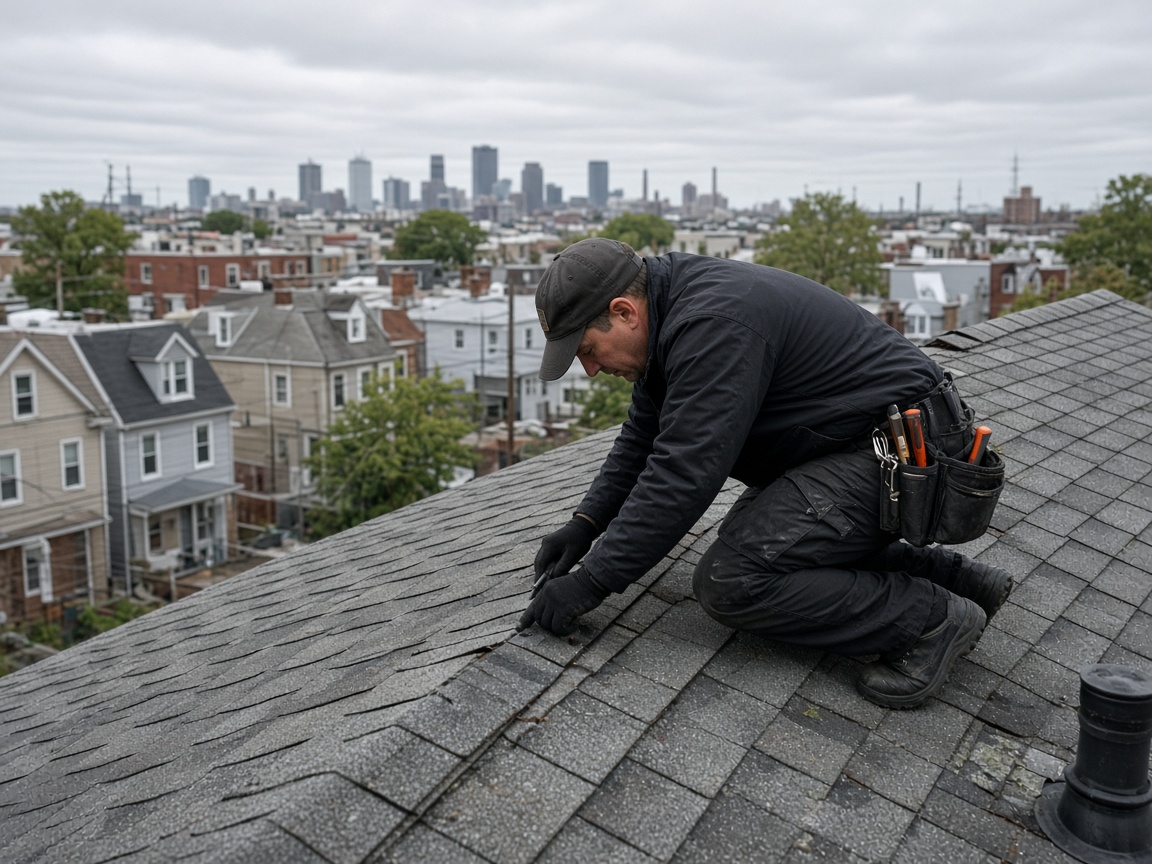
Newark homes built before 1950 often feature slate or asphalt shingles over older decking that has been patched multiple times. A proper roof inspection starts at the attic to check for water staining on rafters and insulation before moving to the exterior. Cold winter cycles followed by humid summers accelerate shingle granule loss and flashing deterioration around chimneys common in the Ironbound and Central Ward.
Edge cases include flat sections on row homes near Newark Penn Station where ponding water meets tree debris from Branch Brook Park. Inspectors must also evaluate step flashing where additions meet original structures, a frequent leak source after decades of settlement. Proximity to Newark Liberty International Airport means more wind-driven rain exposure that can lift underlayment on south-facing slopes.
Code compliance checks cover Essex County requirements for ice and water shield in valleys and proper ventilation ratios to prevent ice dam formation during sudden freezes. Homeowners in University Heights and South Ward often overlook soffit intake blocked by insulation upgrades, which shortens roof life. Inspections document these conditions with photos for insurance or real estate purposes.
Access challenges arise on three-story brownstones in the North Ward where ladder placement is limited by narrow sidewalks and overhead wires. Inspectors note these limitations and recommend drone follow-up when visual confirmation from ground level is insufficient.
Technician insight
In Newark, the thing that catches most people out with Roof Inspection is how quickly ice dams form on the north slopes of North Ward brownstones during our cold winters, then leak once the humid summer humidity sets in. Homeowners often miss the blocked soffits behind aluminum siding that make the problem worse.
Hidden Leak in Weequahic Row Home
Owner noticed ceiling stains after a March thaw. Inspection revealed failed flashing where a 1970s addition met the original slate roof. We documented the damage and recommended targeted repair before summer storms arrived. The owner avoided a full re-roof and scheduled work during drier months.
Roof Inspection Services We Offer
✓Attic Leak Detection Inspection
Checks rafters, insulation, and ceiling joists for moisture in Newark row homes where hidden leaks often appear after heavy winter snow melt.
✓Flashing and Chimney Seal Assessment
Examines step flashing, counter flashing, and chimney crowns common on older Essex County properties near Prudential Center.
✓Gutter and Drainage Evaluation
Assesses downspout flow and fascia condition to prevent water backup that damages roofs in humid summer storms across the Ironbound.
✓Shingle and Underlayment Review
Evaluates granule loss, blistering, and underlayment integrity on asphalt roofs typical in Vailsburg and Weequahic neighborhoods.
✓Drone-Assisted High Roof Survey
Provides close-up imagery of steep or multi-story roofs where ladder access is restricted near Newark Penn Station.
Roof Inspection Cost in Newark, NJ
| Service | Typical Range | What Affects It |
|---|---|---|
| Single-family home inspection | $200–$350 | Up to two stories with attic access in neighborhoods like Vailsburg |
| Multi-unit or three-story inspection | $350–$500 | Includes drone when ladder placement is limited near downtown |
| Emergency inspection add-on | $75–$150 | Same-day visit after storm damage in Ironbound or North Ward |
Ranges are typical for Newark, NJ and confirmed with an exact written quote before any work starts.
How it works
- 1
Schedule and Review History
Confirm appointment during business hours and gather prior repair records for the property in Newark.
- 2
Attic Examination
Inspect for staining, mold, and ventilation issues from inside before exterior work begins.
- 3
Exterior Walk and Drone Survey
Check shingles, flashing, and penetrations while documenting conditions with photos and notes.
- 4
Report Delivery
Provide written findings with prioritized recommendations and photos within 48 hours.
Pricing
Most Newark roof inspections fall in the $200–$450 range depending on roof size, stories, and access needs.