
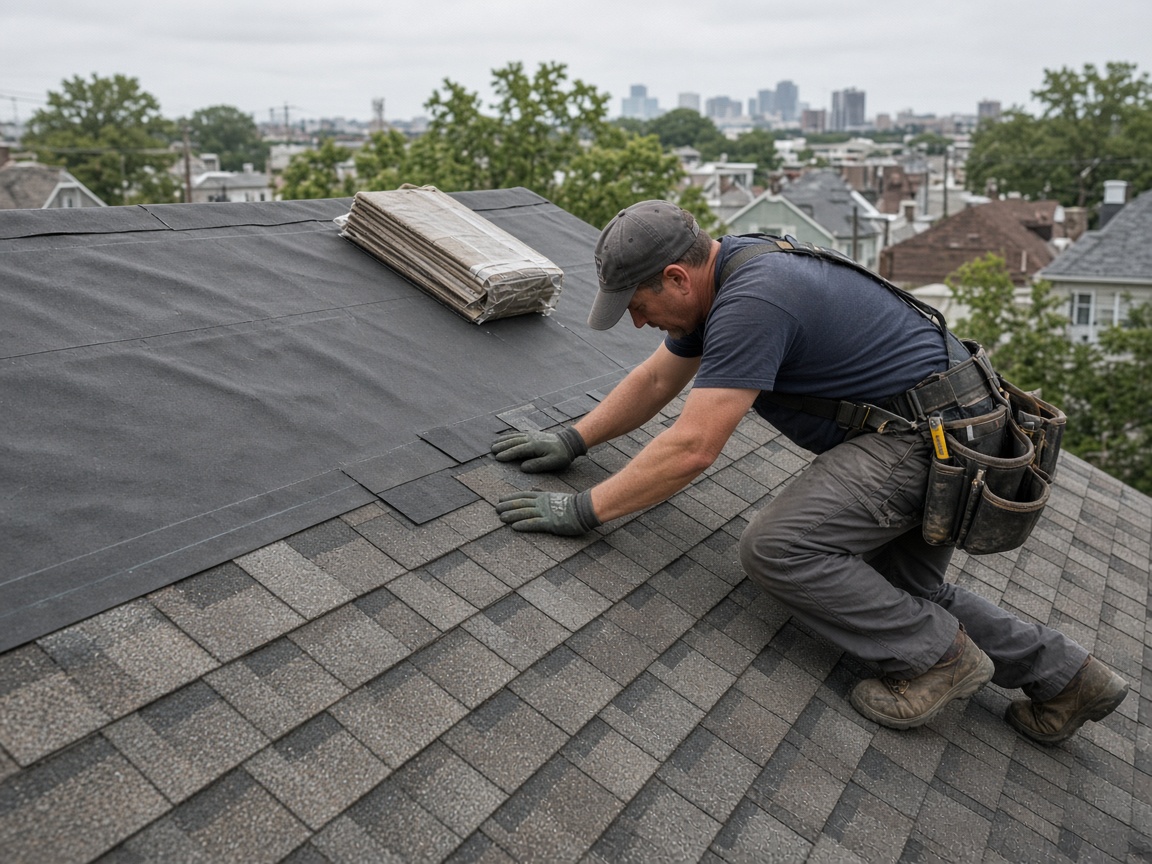
Architectural shingles handle Newark's humid subtropical swings better than three-tab styles because their laminated layers resist wind uplift during winter nor'easters and heat expansion in July. Homes in Ironbound and Vailsburg often carry original slate or cedar underlayers from the early 1900s, so installers must verify deck integrity before nailing new shingles to avoid telegraphing old damage. Essex County code requires ice-and-water shield along eaves and valleys plus proper ridge venting, details that matter when temperatures swing from below freezing to humid summer days.
Steep pitches common on North Ward Victorians demand extra step flashing around chimneys and dormers to keep water from backing up under the thicker shingle profile. In University Heights near the Newark Museum, tree cover from Branch Brook Park drops leaves and sap that can stain lighter granule colors, so darker architectural options are frequently chosen. Crews also watch for hidden rot around older plumbing vents that service many Central Ward row homes.
Proper starter strip and drip-edge installation prevents wind-driven rain from reaching the deck during coastal storms that reach Newark from Jersey City and Elizabeth. Overlooking the required 6-inch overlap at hips and ridges is the fastest way to create leaks when snow melts on south-facing slopes. Matching the existing shingle profile keeps the look consistent on streets where many roofs were last replaced in the 1990s.
Technician insight
In Newark the thing that catches most people out with Architectural Shingle Installation is hidden rot around plumbing vents on 1920s–1940s homes in the North Ward and Weequahic; once the old shingles come off you often find the deck has softened from years of ice dam leaks that three-tab roofs hid until now.
North Ward Victorian Roof Refresh
A 1938 two-story in the North Ward showed granule loss and attic moisture after winter ice dams. Inspection found soft decking around two plumbing vents. Crew removed two layers, replaced damaged sheathing, added ice-and-water shield, and installed architectural shingles with ridge vent. Homeowner reported drier attic and no further leaks during the next spring thaw.
Architectural Shingle Installation Services We Offer
✓Architectural Shingle Replacement
Full tear-off and replacement using laminated shingles suited to Newark's freeze-thaw cycles and older decking found in South Ward homes.
✓Architectural Shingle Overlay Installation
Single-layer overlay option for sound existing roofs in Weequahic and East Orange border areas where complete tear-off is not required.
✓Ridge Vent Integration with Architectural Shingles
Cut-in ridge venting installed beneath architectural shingles to reduce attic heat buildup during Newark's humid summers.
✓Architectural Shingle Color Matching
Granule color selection to match existing roofs on historic properties near Prudential Center and Downtown Newark.
✓Ice and Water Shield Under Architectural Shingles
Full eave and valley membrane application required for Essex County code compliance on homes exposed to winter ice dams.
Architectural Shingle Installation Cost in Newark, NJ
| Service | Typical Range | What Affects It |
|---|---|---|
| Architectural Shingle Installation | $5,800–$11,500 | Varies by square footage and number of layers removed |
| Ice And Water Shield Addition | $650–$1,400 | Required on older homes near Branch Brook Park |
| Ridge Vent With Shingles | $450–$950 | Depends on ridge length and attic access |
| Steep Pitch Premium | $800–$2,200 | Common on North Ward and Ironbound Victorians |
Ranges are typical for Newark, NJ and confirmed with an exact written quote before any work starts.
How it works
- 1
Roof Assessment
Inspect decking, flashing, and ventilation on site in the target neighborhood to identify rot or prior repairs common in pre-1950 Newark housing.
- 2
Material Selection
Choose architectural shingle weight and color that matches local wind and heat exposure while meeting Essex County code requirements.
- 3
Deck Preparation
Remove old shingles or overlay where needed, install ice-and-water shield, and replace damaged sheathing around vents and valleys.
- 4
Shingle Installation
Apply starter strips, field shingles, and ridge cap with proper nailing pattern and step flashing at all penetrations.
- 5
Final Inspection
Check ridge venting, drip edge, and granule coverage before cleanup and walkthrough with the homeowner.
Pricing
Upfront quotes based on roof size, pitch, access, and whether tear-off is required in Newark neighborhoods.